How Companies Use Meltwater and Brandwatch to Understand Market Trends
How Companies Use Meltwater and Brandwatch to Understand Market Trends | Understanding market trends is no longer limited to reading industry reports or conducting traditional surveys. Companies now have access to enormous amounts of information from news websites, social media, blogs, forums, reviews, and other digital channels.
The challenge is turning that information into something useful.
This is where media intelligence and social listening platforms such as Meltwater and Brandwatch can play an important role. Companies can use these platforms to monitor conversations, track competitors, identify emerging topics, measure brand sentiment, and discover changes in consumer behavior.
Instead of relying entirely on assumptions, businesses can use large amounts of publicly available data to identify patterns and make more informed decisions.
What Are Meltwater and Brandwatch?
Meltwater and Brandwatch are platforms designed to help organizations monitor and analyze information from digital media and social channels.
Their capabilities can include areas such as:
- Media monitoring
- Social listening
- Brand monitoring
- Competitor analysis
- Sentiment analysis
- Trend discovery
- Audience insights
- Reporting and analytics
While the platforms have different products, features, and approaches, both can help businesses answer an important question:
What are people saying about our market, brand, competitors, and industry?
Why Market Trend Monitoring Matters
Markets can change quickly.
A new product can suddenly become popular. A competitor can launch an unexpected campaign. A negative customer experience can spread across social media. A new cultural trend can change what consumers expect from an entire industry.
Companies that notice these changes early may have more time to respond.
Market trend monitoring can help businesses identify:
- Emerging customer needs
- Changes in consumer sentiment
- Competitor activity
- New market opportunities
- Potential reputation risks
- Popular products or topics
- Industry conversations
- Changes in customer expectations
The goal is not to react to every online conversation.
Instead, companies look for patterns that may have strategic significance.
1. Monitoring Brand Mentions
One of the most basic uses of media intelligence platforms is tracking mentions of a company or brand.
A business can monitor where its name appears across relevant sources and analyze the context surrounding those mentions.
For example, a company might discover that customers are frequently discussing:
- Product quality
- Customer service
- Pricing
- Delivery times
- New features
- Competitors
This information can reveal issues that may not appear in traditional customer surveys.
It can also help companies understand how their brand is perceived outside their own marketing channels.
2. Tracking Competitors
Companies do not operate in isolation.
Monitoring competitors can provide insight into what other businesses are doing and how audiences respond.
Businesses can track topics such as:
- New product launches
- Marketing campaigns
- Executive announcements
- Customer complaints
- Positive reviews
- Media coverage
- Industry partnerships
For example, if a competitor launches a new service and receives significant attention, a company can analyze the conversation surrounding that launch.
The objective is not simply to copy the competitor.
Instead, the information can help identify gaps and opportunities in the broader market.
3. Identifying Emerging Trends
One of the most valuable applications of social listening is detecting trends before they become mainstream.
Suppose conversations around a particular product category begin increasing across several platforms.
A company may investigate:
- What is driving the discussion?
- Who is participating?
- Which products are mentioned?
- What complaints are appearing?
- Which keywords are becoming more common?
- Is the conversation growing consistently?
A single viral post does not necessarily represent a market trend.
But if similar conversations appear repeatedly across multiple sources, the signal becomes more interesting.
4. Understanding Consumer Sentiment
Companies often want to know not just what people are saying, but how they feel about a topic.
Sentiment analysis attempts to classify conversations as positive, negative, or neutral.
For example:
Positive:
“I’m really impressed with the new version.”
Negative:
“The latest update made the app much harder to use.”
Neutral:
“The company released a new version today.”
Sentiment analysis can help businesses process large volumes of conversations more efficiently.
However, automated sentiment analysis is not perfect.
Sarcasm, cultural references, slang, mixed emotions, and context can make automated classification difficult.
Human review remains valuable when the stakes are high.
5. Discovering Customer Pain Points
Market research is often most valuable when it reveals problems customers are experiencing.
Social listening can help companies identify recurring complaints.
For example, customers might repeatedly mention:
- Difficult checkout processes
- Poor customer support
- Expensive subscriptions
- Complicated products
- Slow delivery
- Missing features
When the same issue appears repeatedly, it can become a potential product-development opportunity.
A company can ask:
What problem are customers repeatedly describing that competitors have not solved well?
That question can lead to valuable innovation.
6. Measuring Campaign Performance
Marketing teams can use media intelligence platforms to monitor how campaigns perform beyond basic advertising metrics.
They may analyze:
- Volume of mentions
- Engagement
- Media coverage
- Audience reactions
- Sentiment
- Share of voice
- Influencer activity
For example, a company launches a new advertising campaign.
Instead of only asking how many people saw the campaign, the marketing team can examine what people actually said about it.
Did consumers understand the message?
Did they react positively?
Did the campaign generate unexpected criticism?
Did other media outlets discuss it?
These insights provide additional context around campaign performance.
7. Measuring Share of Voice
Share of voice refers broadly to how much attention a brand receives compared with competitors within a particular conversation or market.
For example, suppose three companies dominate discussion around a particular product category.
A business can monitor how frequently each brand is mentioned and how audiences respond to those mentions.
This can provide a general indication of competitive visibility.
However, a high share of voice is not automatically positive.
A brand can receive a lot of attention because of a major controversy.
That is why companies should examine both volume and context.
8. Finding Influencers and Key Voices
Not everyone in an online conversation has the same level of influence.
Some journalists, creators, analysts, customers, or industry experts may generate significantly more attention than others.
Companies can use monitoring tools to identify people who frequently discuss relevant topics.
For example, a technology company might discover that certain creators consistently influence conversations around a particular product category.
Instead of sending generic marketing messages to thousands of accounts, the company can focus on understanding the people who genuinely shape its target audience.
9. Tracking Industry News
Media monitoring is particularly useful for industries where news can quickly affect business decisions.
Companies can track:
- Regulatory developments
- Mergers and acquisitions
- Competitor announcements
- Product launches
- Executive changes
- Economic developments
- Industry controversies
This allows teams to create a more complete picture of what is happening around their business.
For large organizations, automated alerts can make it easier to identify important developments without manually checking hundreds of sources every day.
10. Finding Opportunities in Customer Conversations
Not every market signal is negative.
Sometimes customers reveal opportunities that companies have not considered.
For example, customers might repeatedly ask for:
- A new product variation
- A specific feature
- A different pricing model
- Better regional availability
- Integration with another service
These conversations can provide useful qualitative input for product teams.
The company can then combine these observations with sales data, customer research, and other evidence before deciding whether the opportunity is commercially meaningful.
11. Crisis and Reputation Monitoring
One of the most important uses of media monitoring is identifying potential reputation problems.
A negative story can spread quickly.
A company may monitor sudden increases in mentions or unusual changes in sentiment.
For example:
Normal:
1,000 mentions per day
Sudden increase:
15,000 mentions in one day
A spike does not automatically mean a crisis.
It could be caused by a successful campaign or a major product announcement.
But a sudden increase combined with strongly negative conversation may justify immediate investigation.
Early awareness can give communication teams more time to understand the situation and respond appropriately.
12. Comparing Different Markets
Global companies often need to understand how their brands are perceived in different countries or regions.
A campaign that performs well in one market may receive a very different reaction somewhere else.
Businesses can compare conversations by:
- Country
- Language
- Region
- Demographic group
- Product category
- Customer segment
This can reveal cultural differences that are difficult to identify through global averages.
How Meltwater and Brandwatch Fit Into a Larger Research Strategy
Companies should not treat Meltwater or Brandwatch as a complete replacement for market research.
These platforms are most useful when combined with other sources.
A broader research system might include:
Social listening + customer surveys + sales data + website analytics + competitor research + industry reports
Each source answers different questions.
| Data Source | What It Can Tell You |
|---|---|
| Social listening | What people are discussing |
| Surveys | What customers explicitly say |
| Sales data | What customers actually buy |
| Website analytics | How users behave online |
| Competitor research | What rivals are doing |
| Industry reports | Broader market conditions |
Combining these sources can provide a more reliable picture than relying on one dataset.
The Difference Between Signals and Trends
This is an important distinction.
A signal is an observation that may indicate something is changing.
A trend is a sustained pattern that has stronger evidence behind it.
For example, one viral post about a new type of product is a signal.
If thousands of consumers across different platforms begin discussing the same product category over several months, that may provide stronger evidence of a trend.
Companies should therefore avoid making major decisions based on isolated online activity.
Challenges Companies Need to Consider
Media intelligence tools are powerful, but they have limitations.
Data Quality
Not every online conversation is accurate or representative.
Algorithmic Bias
Automated classification systems can misunderstand sarcasm, language, or context.
Information Overload
Companies may collect more information than teams can realistically analyze.
Privacy and Compliance
Organizations must ensure their monitoring practices comply with applicable laws, platform policies, and ethical standards.
False Signals
Viral content does not always represent broader consumer behavior.
Good analysis requires context.
How Companies Can Turn Monitoring Into Action
Collecting data is only the first step.
The real value comes from turning observations into decisions.
A useful workflow might look like this:
Monitor → Identify patterns → Validate → Interpret → Act → Measure
For example:
- A company notices increasing complaints about delivery.
- Analysts identify the most common complaint.
- The operations team checks whether internal delivery data confirms the issue.
- Management investigates the cause.
- The company changes its delivery process.
- The team monitors customer feedback afterward.
This creates a feedback loop between market intelligence and business operations.
Meltwater and Brandwatch can help companies understand market trends by turning large volumes of digital conversations into useful insights.
Businesses can use these platforms to monitor brands, analyze competitors, identify emerging topics, measure sentiment, discover customer pain points, track campaigns, and detect potential reputation issues.
However, the tools themselves do not automatically reveal the truth.
A sudden increase in mentions does not necessarily mean a major trend. A negative sentiment score does not explain why customers are unhappy. And a popular online conversation does not always represent the entire market.
The strongest approach is to combine media intelligence with other forms of evidence.
When companies use Meltwater and Brandwatch alongside customer research, sales data, analytics, and industry knowledge, they can build a much clearer understanding of changing markets.
The real competitive advantage is not simply having more data.
It is knowing which signals matter, validating them, and turning those signals into better business decisions.

Bridging Generations: How Millennial-Led Digital Media Can Reach Gen Z and Gen Alpha
How Millennial Led Digital Media Can Reach Gen Z and Gen Alpha | Digital media has transformed the way generations communicate, discover information, and consume entertainment. Millennials grew up during the transition from desktop computers and early social media to smartphones and streaming platforms. Gen Z has experienced much of its adolescence in a mobile-first, highly visual internet, while Gen Alpha is growing up surrounded by increasingly interactive and algorithm-driven digital experiences.

For millennial-led digital media brands, this generational shift creates both a challenge and an opportunity.
The challenge is understanding younger audiences without trying to imitate them. The opportunity is using the experience, creativity, and cultural knowledge of millennials to create content that feels relevant to Gen Z and Gen Alpha.
The key is not to erase generational differences. It is to build bridges between them.
Understanding the Generational Digital Divide
Each generation has developed its relationship with technology in a different environment.
Millennials remember a time before smartphones became central to everyday life. Many experienced the rise of blogs, forums, Facebook, YouTube, and early online communities.
Gen Z entered adolescence in a world where smartphones, social platforms, short-form video, and algorithmic recommendations were already established.
Gen Alpha is growing up in an even more connected environment, where video, gaming, AI-powered tools, interactive platforms, and creator-driven media are increasingly normal parts of everyday life.
These differences influence how audiences discover content and decide whether something deserves their attention.
Millennials Have an Important Advantage
Millennial media creators should not assume that being older automatically makes their content less relevant.
In fact, their experience can be an advantage.
Millennials have lived through multiple stages of the internet. They understand both traditional digital publishing and the newer creator economy.
This allows them to connect different forms of media.
A millennial-led publication might combine:
- Long-form journalism
- Short-form video
- Podcasts
- Newsletters
- Social media
- Community discussions
- Interactive content
The strength lies in understanding how these formats can work together rather than treating one platform as the entire strategy.
Authenticity Matters More Than Trying to Look Young
One of the biggest mistakes a millennial-led media brand can make is attempting to imitate Gen Z language or trends.
Using unfamiliar slang, copying viral formats without understanding them, or forcing references into content can make a brand feel less authentic.
Younger audiences can recognize when a brand is trying too hard.
Instead of asking:
“How can we sound like Gen Z?”
A better question is:
“How can we make content that Gen Z genuinely finds useful, entertaining, or meaningful?”
Authenticity comes from understanding the audience rather than pretending to be the audience.
Create for Interests, Not Just Age
Generational labels can be useful, but they should not become the entire audience strategy.
Gen Z and Gen Alpha are not identical groups. Their interests vary according to personality, location, culture, education, hobbies, and online communities.
A teenager interested in gaming may have more in common with a young adult gamer than with another teenager who follows completely different content.
This is why interest-based content can be more effective than relying entirely on age categories.
Topics such as gaming, music, technology, fashion, sports, entertainment, education, and internet culture can create connections across generations.
Short-Form Video Can Open the Door
Short-form video has become an important way for younger audiences to discover content.
Millennial-led media companies can use short videos as entry points into deeper stories.
For example, a publication could turn a long article into:
- A 30-second explanation.
- A short interview clip.
- A visual fact or statistic.
- A behind-the-scenes video.
- A follow-up story directing interested viewers to the full article.
The goal is not necessarily to replace long-form journalism or storytelling.
Instead, short-form content can act as the front door to a larger media ecosystem.
Humor Can Connect Generations
Humor is one of the most effective ways to bridge generational differences.
However, humor works best when it is based on shared experiences rather than forced references.
A millennial creator might use nostalgia about early internet culture while connecting it to modern digital life.
For example, a piece of content could compare:
“What we thought the internet would be like in 2005”
with:
“What the internet actually became.”
This gives younger audiences a way to explore an earlier digital era while giving older audiences something familiar.
Generational differences themselves can become the subject of entertaining content.
Nostalgia Can Be a Bridge
Millennials have a large amount of cultural nostalgia that can be valuable to younger audiences.
Old games, music, movies, technology, fashion, websites, and internet trends can be presented as cultural history rather than simply nostalgia.
For Gen Z and Gen Alpha, older digital culture can feel surprisingly interesting because it represents an internet that existed before their current experience.
A millennial-led platform can therefore turn its historical knowledge into storytelling.
The important thing is to explain why something mattered rather than assuming the audience already understands it.
Make Content Participatory
Younger audiences are accustomed to interacting with content rather than simply consuming it.
Polls, questions, comments, challenges, livestreams, community submissions, and interactive formats can encourage participation.
Instead of publishing:
“Here is our opinion.”
A media brand can ask:
“What do you think?”
That shift can turn an audience into a community.
Participation also gives media organizations valuable feedback about what their audience actually cares about.
Give Younger Creators a Voice
A millennial-led media organization does not have to be controlled exclusively by millennials.
Hiring or collaborating with Gen Z creators can help organizations understand younger audiences from the inside.
Younger contributors can provide insight into:
- Platform culture
- Emerging trends
- Language
- Online communities
- New forms of storytelling
- Changing audience expectations
The goal should not be to make younger employees responsible for “understanding Gen Z.”
Instead, their perspectives should be treated as valuable creative contributions.
Build Across Multiple Platforms
Different platforms can serve different purposes.
A media brand might use one platform for discovery, another for community, another for long-form content, and another for direct audience relationships.
For example:
Short-form video: discovery and quick entertainment
YouTube: deeper video storytelling
Podcast: longer conversations
Website: detailed articles and evergreen information
Newsletter: direct audience relationship
The exact platform mix will change over time, but the underlying principle remains useful: adapt the format without abandoning the brand’s identity.
Gen Alpha Requires a Different Approach
Reaching Gen Alpha requires additional consideration because much of this generation is still young.
Media organizations targeting children or younger teenagers need to prioritize age-appropriate content, privacy, safety, parental considerations, and responsible design.
This audience should not simply be treated as a younger version of Gen Z.
Their media habits will continue to develop as technology changes. Gaming, interactive entertainment, video, educational content, and emerging AI experiences may all influence how they discover and understand information.
For millennial-led organizations, this means building a strategy that can evolve rather than assuming today’s behavior will remain unchanged.
Education and Entertainment Can Work Together
Younger audiences do not necessarily separate education and entertainment as strictly as traditional media formats sometimes do.
Complex subjects can be presented through:
- Explainer videos
- Visual storytelling
- Animated graphics
- Interviews
- Interactive quizzes
- Short documentaries
- Creator-led discussions
A serious topic does not have to be boring.
Likewise, entertaining content can still provide meaningful information.
The strongest media often finds the balance between learning and enjoyment.
Tell Stories That Respect Younger Audiences
Young audiences should not be underestimated.
Content does not need to become simplistic simply because it is designed for younger viewers.
Instead, creators should make complex ideas easier to understand through better storytelling.
That can mean:
- Starting with a compelling question
- Using clear language
- Showing rather than telling
- Removing unnecessary jargon
- Using visual examples
- Connecting abstract topics to everyday experiences
Good storytelling can make complicated subjects accessible without making them shallow.
Build Trust Across Generations
Trust is particularly important in digital media.
Audiences encounter enormous amounts of information every day, making credibility an important differentiator.
Millennial-led media brands can build trust by being transparent about sources, correcting mistakes, distinguishing opinion from reporting, and avoiding manipulative engagement tactics.
Younger audiences may discover a brand through a short video, but trust can determine whether they return.
The long-term goal should therefore be more than gaining views.
It should be building a relationship.
Measure More Than Views
Views and follower counts can be useful, but they do not tell the entire story.
Media organizations should also examine:
- Watch time
- Engagement quality
- Returning visitors
- Newsletter subscriptions
- Community participation
- Content sharing
- Conversion rates
- Audience retention
A piece of content with fewer views but strong repeat engagement may be more valuable than a viral post that disappears after a few hours.
The goal is to understand what creates lasting audience relationships.
The Future of Cross-Generational Media
The internet is becoming increasingly fragmented, but that does not mean generations must become isolated from one another.
In fact, digital media can create new opportunities for cultural exchange.
Millennials can bring historical knowledge of the early internet. Gen Z can contribute a deep understanding of today’s creator-driven digital culture. Gen Alpha will eventually bring perspectives shaped by technologies and platforms that are still developing.
Media organizations that encourage this exchange can become more adaptable.
The future may not belong to one generation’s media style. It may belong to platforms capable of combining different perspectives.
Bridging generations through digital media is not about making millennial-led content look younger.
It is about understanding what different audiences value and creating meaningful connections between them.
Millennial creators have an important advantage: they have experienced the evolution of digital culture firsthand. They can use that experience to create content that combines depth, context, creativity, and modern formats.
To reach Gen Z and Gen Alpha effectively, media brands should focus on authenticity, participation, visual storytelling, platform flexibility, younger voices, and genuine audience needs.
The strongest strategy is simple:
Do not imitate the next generation. Listen to them, collaborate with them, and create with them.
That is how millennial-led digital media can become more than a voice from one generation. It can become a bridge connecting several generations through stories, ideas, and shared digital experiences.
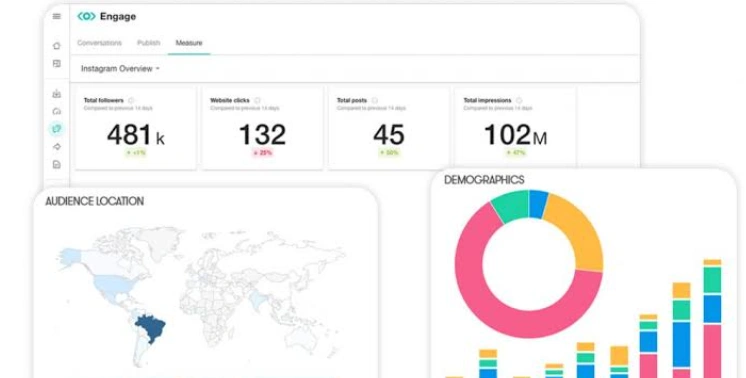
Meltwater Media Intelligence: Turning News Data into Strategic Business Insights
Meltwater Media Intelligence: How News Data Helps Businesses Make Smarter Decisions
Meltwater Media Intelligence: Turning News Data into Strategic Business Insights | In the modern digital landscape, information moves faster than ever before. Every day, millions of news articles, social media posts, online discussions, and digital conversations shape public opinion and influence business decisions. For companies that want to stay competitive, simply collecting information is no longer enough—they need to understand what that information means.

This is where Meltwater Media Intelligence plays a crucial role. By transforming massive amounts of media data into actionable insights, Meltwater helps organizations monitor their reputation, understand market trends, track competitors, and make strategic decisions based on real-time information.
What Is Meltwater Media Intelligence?
Meltwater Media Intelligence is a media monitoring and analytics solution designed to help businesses track, analyze, and understand conversations across news platforms, social media channels, blogs, podcasts, and other digital sources.
Founded in 2001, Meltwater became one of the world’s leading media intelligence companies by helping organizations turn online information into valuable business knowledge.
The platform combines:
- Media monitoring
- Artificial intelligence
- Data analytics
- Sentiment analysis
- Competitive intelligence
- Brand tracking
- Public relations measurement
Together, these tools allow companies to understand how they are perceived and how external events may affect their business.
The Importance of Media Intelligence in Business
Businesses today operate in an environment where reputation can change within minutes. A single news article, customer review, or viral social media post can influence public perception.
Traditional research methods often take days or weeks to collect and analyze information. Media intelligence platforms provide faster access to insights by continuously monitoring digital conversations.
Companies use media intelligence to answer important questions:
- How is our brand being discussed online?
- What are customers saying about our products?
- What trends are emerging in our industry?
- How are competitors performing?
- What issues could impact our reputation?
These insights help businesses respond faster and make better strategic decisions.
How Meltwater Converts News Data into Insights
Meltwater does not simply collect information—it processes large amounts of data and identifies meaningful patterns.
The platform analyzes:
1. News Coverage Monitoring
Businesses can track mentions of their brand across thousands of online news sources.
This helps organizations understand:
- Media visibility
- Public perception
- Industry coverage
- Reputation changes
- Crisis situations
By monitoring news activity, companies can identify opportunities and risks before they become major problems.
2. Social Media Listening
Social media platforms contain valuable information about customer opinions and market trends.
Meltwater helps businesses analyze conversations from social networks by tracking:
- Brand mentions
- Customer feedback
- Trending topics
- Influencer discussions
- Audience reactions
This allows companies to understand what people are saying beyond traditional surveys.
3. Sentiment Analysis
Not all mentions have the same impact. A brand may receive thousands of mentions, but understanding whether those discussions are positive, negative, or neutral is essential.
Meltwater uses AI-powered analysis to identify sentiment patterns.
Businesses can measure:
- Positive customer reactions
- Negative experiences
- Public concerns
- Brand reputation changes
This helps communication teams respond appropriately.
Key Features of Meltwater Media Intelligence
Real-Time Media Monitoring
Organizations can receive updates about important conversations as they happen.
Real-time monitoring helps businesses:
- Detect breaking news
- Track campaigns
- Manage crises
- Identify opportunities quickly
Competitive Intelligence
Understanding competitors is essential for strategic planning.
Meltwater allows companies to analyze:
- Competitor media coverage
- Share of voice
- Industry positioning
- Marketing activities
- Public perception
This information helps businesses identify strengths, weaknesses, and market opportunities.
AI-Powered Analytics
Artificial intelligence enables faster analysis of large amounts of information.
AI capabilities help identify:
- Emerging trends
- Important topics
- Influential voices
- Audience behavior patterns
- Potential reputation risks
Instead of manually reviewing thousands of sources, teams can focus on strategic actions.
Reporting and Measurement
Data becomes more valuable when it can be clearly communicated.
Meltwater provides reporting tools that help organizations measure:
- Media exposure
- Campaign performance
- Brand awareness
- Audience engagement
- Public relations results
These reports help demonstrate the business impact of communication strategies.
How Different Industries Use Meltwater Media Intelligence
Public Relations and Communications
PR teams use Meltwater to monitor media coverage, measure campaigns, and manage brand reputation.
They can identify journalist interests, track press mentions, and evaluate communication effectiveness.
Marketing Teams
Marketing professionals use media intelligence to understand customers and improve campaigns.
Applications include:
- Market research
- Audience analysis
- Campaign tracking
- Trend identification
Financial Services
Banks and financial companies use media monitoring to identify reputation risks, track industry developments, and understand investor sentiment.
Healthcare Organizations
Healthcare companies monitor public conversations, industry news, and patient discussions to better understand market conditions.
Government and Public Organizations
Public institutions use media intelligence to monitor public opinion, analyze communication effectiveness, and respond to emerging issues.
Benefits of Using Meltwater Media Intelligence
Faster Decision-Making
Access to real-time information allows businesses to react quickly to opportunities and challenges.
Better Reputation Management
Organizations can detect negative conversations early and develop appropriate responses.
Improved Market Understanding
Media insights reveal customer expectations, industry trends, and competitor activities.
Data-Driven Strategy
Instead of relying only on assumptions, businesses can use measurable insights to guide decisions.
Stronger Customer Relationships
Understanding public conversations helps companies create more relevant products, services, and communication.
The Role of AI in the Future of Media Intelligence
Artificial intelligence is transforming how organizations analyze information.
Future media intelligence systems will continue improving through:
- Advanced natural language processing
- Predictive analytics
- Automated trend detection
- Deeper audience understanding
- Faster crisis prediction
AI will help companies move from simply reacting to news events toward anticipating future developments.
Challenges of Media Intelligence
Although media intelligence provides powerful advantages, businesses must also consider challenges such as:
- Large volumes of information
- Data accuracy issues
- Privacy concerns
- Need for human interpretation
Technology can identify patterns, but strategic decisions still require human expertise and business understanding.
Why Meltwater Matters in the Digital Age
In a world where information influences reputation, customer behavior, and business performance, media intelligence has become an essential tool.
Meltwater helps organizations transform scattered digital conversations into structured insights. By understanding what people are saying, why they are saying it, and how those conversations affect business goals, companies can make more informed decisions.
Meltwater Media Intelligence: Turning News Data into Strategic Business Insights demonstrates how modern businesses can use technology to understand the rapidly changing information environment.
By combining media monitoring, artificial intelligence, sentiment analysis, and data analytics, Meltwater enables organizations to discover trends, manage reputation, monitor competitors, and build stronger strategies.
In the digital era, information is one of the most valuable resources. Companies that can analyze and apply that information effectively gain a powerful advantage in an increasingly competitive market.